Polymyositis warrior
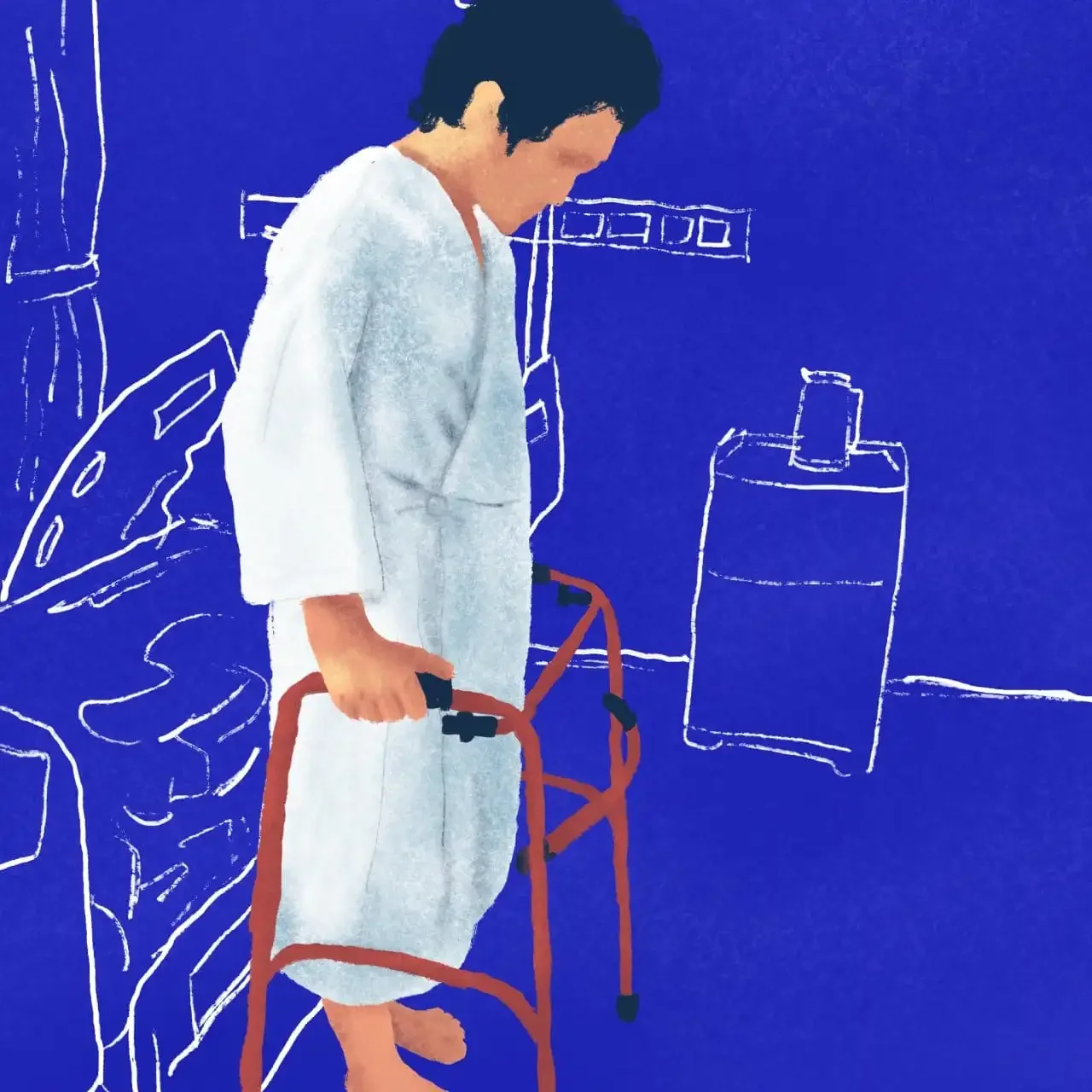
My name is Rifat and I am a polymyositis warrior. On December 16, 2024, I was diagnosed with polymyositis. My feelings were a mix of emotions, but at the same time, I felt relieved to finally have an answer.
The journey to this diagnosis was quite confusing. For the past few months, I had been trying to figure out what was wrong with my legs. Last year, I had Guillain-Barré Syndrome (GBS) and Miller Fisher Syndrome, which turned into a Guillain-Barré and Miller Fisher overlap syndrome. I had fully recovered after several months of therapy, so it was puzzling when the leg weakness returned. Was it related to my history of GBS? Or was this something entirely new?
At first, when the weakness appeared, I tended to ignore it. After all, based on consultations with neurologists and some reading, I learned that GBS does have residual effects—which I interpreted as leg weakness that could return. I tried to stay active and even managed to hit a personal record of 24,000 steps in a day during a trip to Japan, with my daily average being 4,000 steps.
But everything changed last month.
Orthostatic hypotension?
I usually start my day lying in bed while scrolling on my phone. After a while, I get ready for breakfast and take a shower. November 13, 2024, was a different day. As I was getting ready to stand up from bed, suddenly my vision went dark and my head felt like it was being pulled backward. I couldn’t move my hands to break the fall. Luckily, I fell back onto the bed, and once I landed, I could move my hands again. I stayed still for a moment, trying to process the strange sensation. “Oh, maybe I got up too fast,” I thought. I tried to get up slowly again.
Same thing.
I fell again with the same sensation—darkness, a very light head as if something was pulling it backward, and I couldn’t stop myself from falling.
I stayed still for a while and got into a prostrating position to try to get blood flowing to my head, then tried getting up again. The third attempt worked.
Throughout the day, I was confused about what had happened. I consulted ChatGPT, Gemini, and Claude, and all of them said it sounded like orthostatic hypotension (OH). I don’t have a history of hypotension—if anything, I’ve always had mild hypertension. I also told two of my coworkers about it, but neither had experienced anything like it.
The same thing happened again for the next two days.
Learning from experience, I tried to get up gradually, like a baby learning to stand. I started from a prone position, then placed my hands near my chest. As I tried to push my body up using my arms, I fell forward. Again, darkness, a pulling sensation on my head, and my hands were too weak to catch me. The third day was the same, and three days was more than enough.
I decided to go see the neurologist who had handled my GBS case before. I also asked whether this could be OH because what I found online matched what I was feeling. The doctor ran an OH test, but there was no significant change in blood pressure. Then the doctor asked me to lie down and suddenly raise my body. When I did that, the same sensation happened.
The doctor suggested hospitalization for observation, but I declined. She gave me medication and told me to go to the ER if there was no improvement. The diagnosis at the time was acute vestibular syndrome, suspected central positional vertigo.
On November 13 and 14 my daily activities weren’t really disrupted since I was still able to function as usual. But starting from November 15, whatever I did—or didn’t do, even just standing still—everything felt like it was spinning. I fell repeatedly while doing anything, for example, going from a bowing position to standing. Finally, on November 16, 2024, I decided to go to the ER at a different hospital closer to home.
Legs weakened during hospitalization
I was hospitalized with an initial diagnosis of vertigo. During my stay, I went through a series of tests, from blood tests to an MRI, and was eventually diagnosed with benign paroxysmal positional vertigo (BPPV). I underwent a series of therapies and was also taught the Brandt-Daroff maneuver to help reduce vertigo symptoms.
On the third day of hospitalization, my right leg suddenly became weak. The attending doctor suspected that my GBS had returned—either as a residual effect or a new episode. The next day, my left leg also became weak. I was asked to stay a few more days for observation. Fortunately, there was improvement in both legs, and I was discharged on the seventh day.
Leg weakness after hospitalization
On the first day after leaving the hospital, everything felt normal. No vertigo, no leg weakness, although I still had a bit of dizziness. I rested at home for a few days and even went to the mall to refresh. I like going to the mall because it’s the best place to walk in Jakarta. At that time, I managed to hit 10,000 steps without any problems. Two days later, on a WFO day, I decided to go to the office.
Nothing felt unusual at the office—I could go about my day as usual. That evening, I hung out with some colleagues around the Dukuh Atas MRT area. Again, nothing felt off. As usual, on office days I logged around 6,000 to 7,000 steps.
The next day, my legs were extremely sore. My thighs felt like they had just been pedaling a vintage bike up a steep hill all night. I could still walk normally, but any movement that required thigh muscles—like going up or down stairs—left me exhausted. Luckily, it was a WFH day so I could work from bed.
I tried to ignore it and assumed it was just fatigue from staying out late.
The day after, it was the same, but more painful. I felt hopeless because the pain was unbearable. I became even more distressed at the thought of having to fight GBS all over again like last year. I cried because I couldn’t take it anymore.

My wife, hearing me cry, immediately urged me to see the neurologist who treated my GBS. Unfortunately, the next available appointment wasn’t until December 7.
The struggle to get a polymyositis diagnosis
We went to the doctor on December 7 and explained everything, including the previous hospitalization for BPPV. According to the doctor, the symptoms didn’t match GBS, and she suspected an autoimmune condition. She then recommended ANA, RF, and several other blood tests.
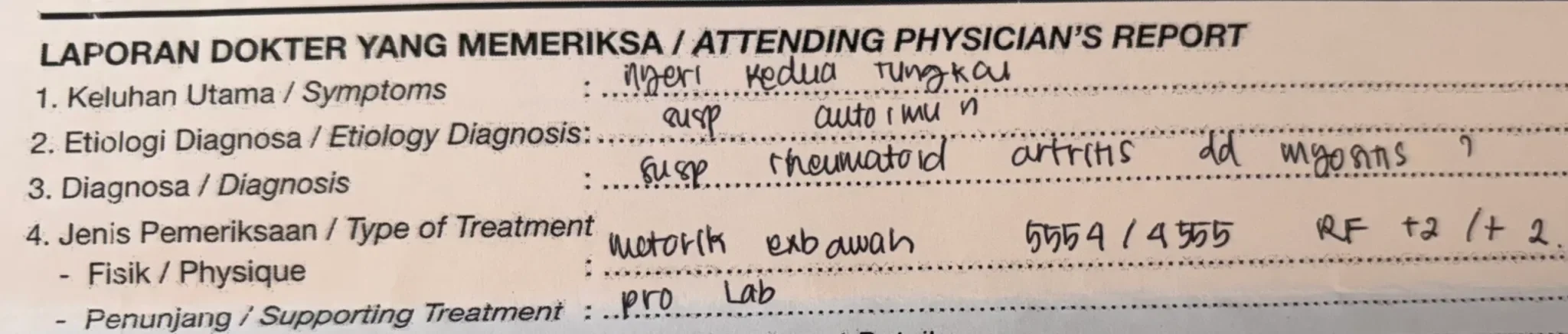
The ANA test came out a few days later. There was no rheumatoid factor, but the ANA result was borderline positive. I sent the test result to the doctor via WhatsApp, and she said there was no need for a follow-up consultation with her—instead, I should go straight to an internist.
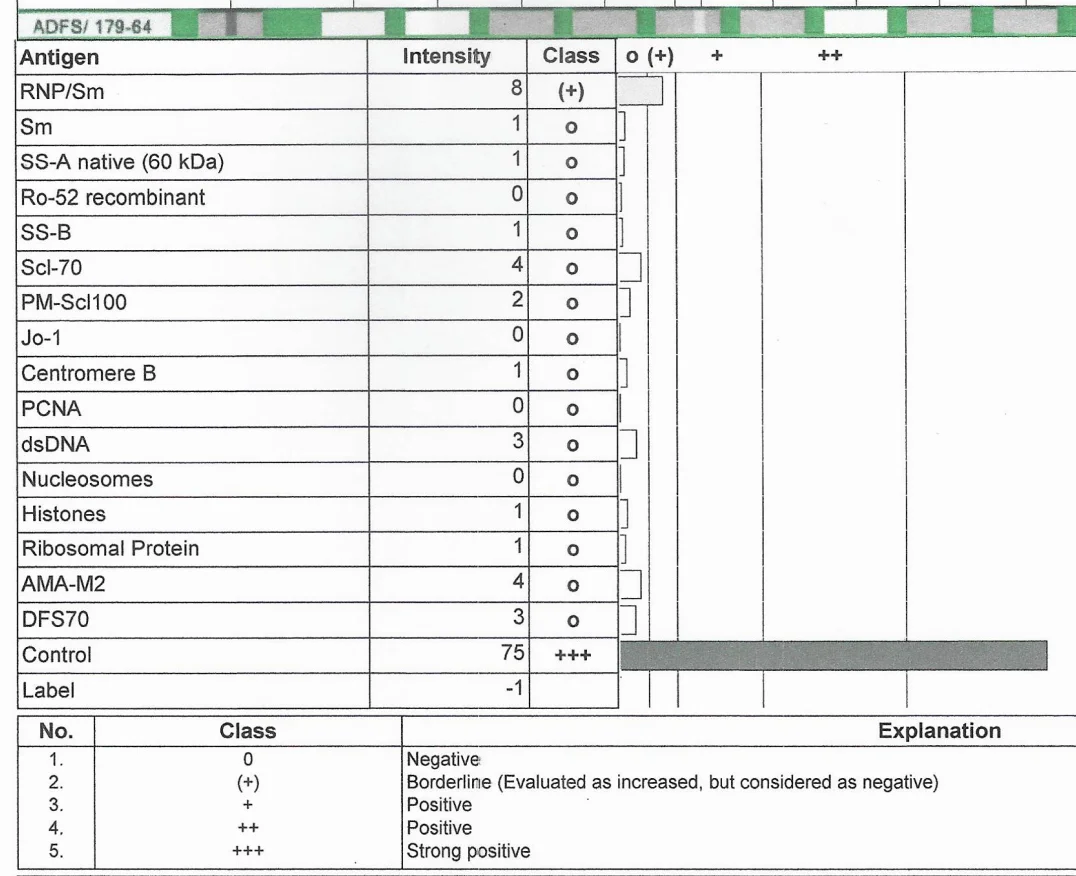
I met with the internist, bringing all my previous test results. After a physical examination and reviewing the test results, the doctor couldn’t confirm a diagnosis yet but suspected it might be myositis, specifically polymyositis. She showed me the Classification Criteria for Idiopathic Inflammatory Myopathies, explaining that my symptoms and medical history were not sufficient yet for a definite diagnosis. She suggested I take a myositis panel and a series of other blood tests.
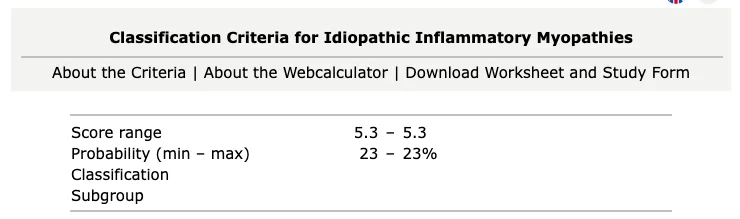
The myositis panel took a very long time to process, which left me overthinking for days. On one hand, I hoped for a negative result so it wouldn’t be autoimmune at all. On the other, I hoped to finally get some clarity.
Eventually, I received an email from the lab showing an LDH increase of 1.5 times the reference value, and a slight increase in AST. CRP and ESR were still normal. On the myositis panel, two results were borderline positive.
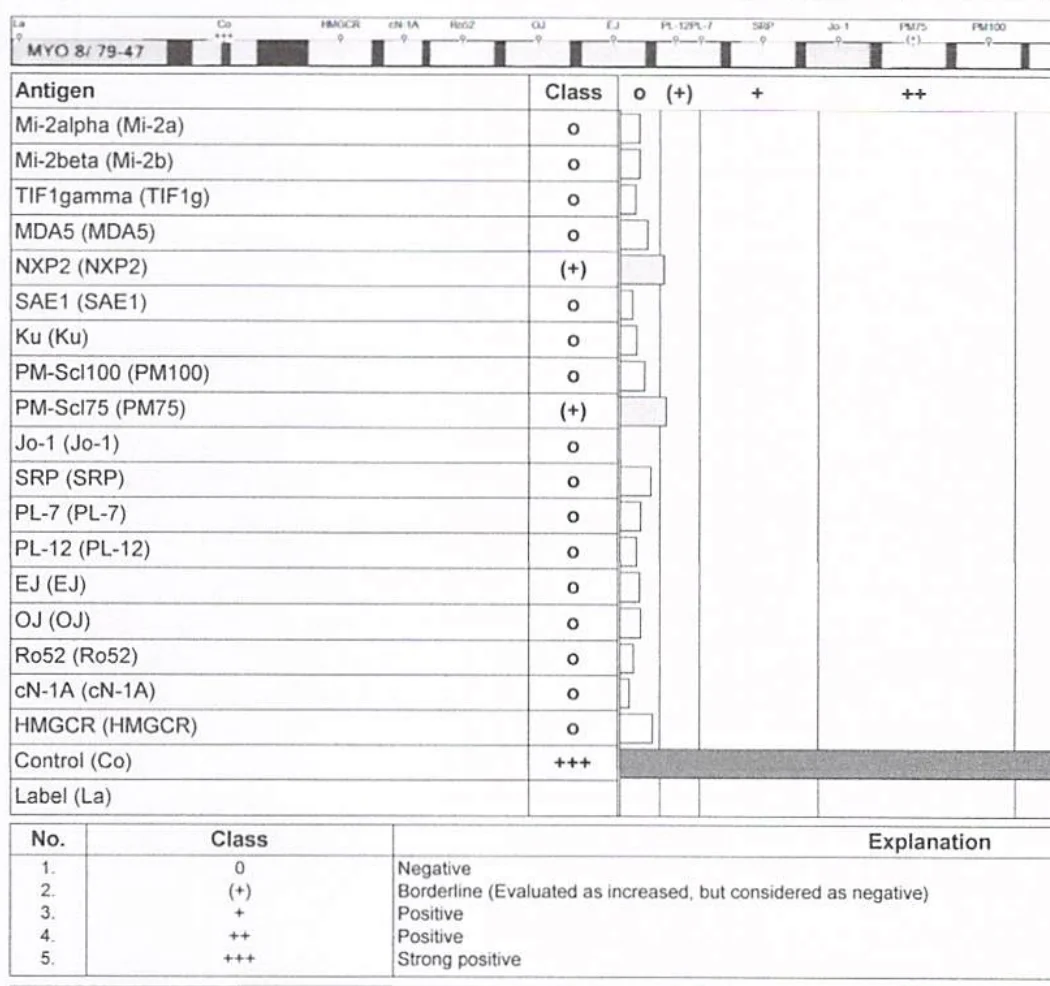
I went back to the internist with the lab results, but according to her, the evidence still wasn’t strong enough to confirm a diagnosis. The doctor felt it was better to wait and see rather than rush into medication therapy.
Wait-and-see also meant more tests to come, while my savings were starting to run low because my insurance limit had already been used up.
Polymyositis diagnosis
I wasn’t satisfied with the explanation, especially since I was already exhausted from dealing with these tiring legs. I decided to seek a second opinion.
My younger brother referred me to his internist, and fortunately, the hospital was close to home. I gathered all the test results I had taken since 2015. I also did a dry run with ChatGPT to simulate a conversation with the doctor.
Finally, on December 16, 2024, I got an appointment with the doctor.
On the day, I brought all my documents. I also prepared all photo evidence and anything else that might help the doctor. After a long and thorough explanation, the doctor finally stated that I was positive for polymyositis.
This diagnosis brought me relief, because I finally knew what I was dealing with; but it also made me anxious, because polymyositis is a lifelong condition.
Since I had previously managed to beat GBS, now it’s time to face a different enemy.
Hi everyone, I'm Rifat, and I'm new here. I was recently diagnosed with polymyositis, and it has been a long journey to finally understand what's wrong with my body. I just started my prednisolone + azathioprine therapy last week! I just want to say hi to everyone 👋